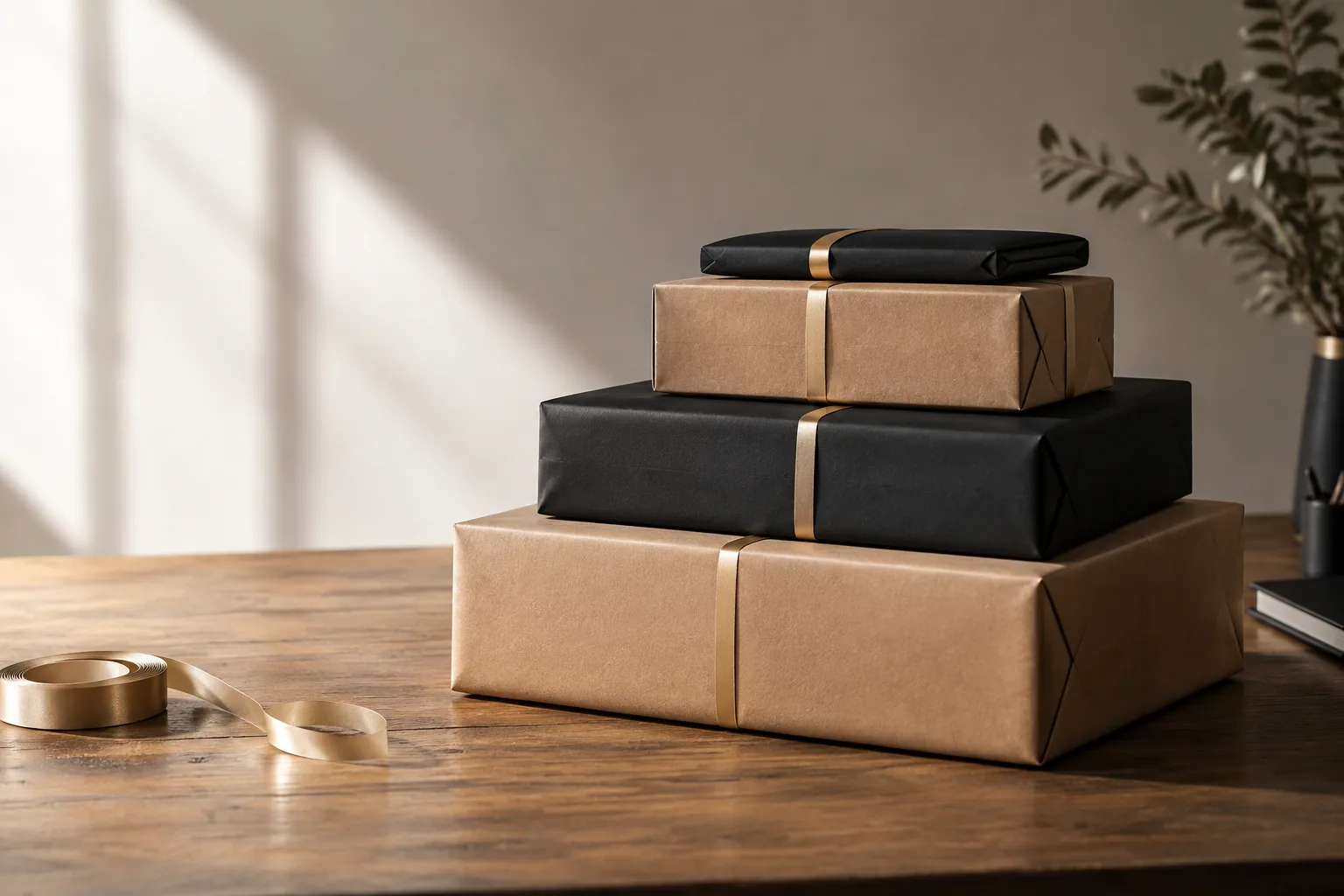
Every parcel is a message about your business, and an unmanaged dropshipping parcel says the supplier's name. This article explains what leaks in a typical blind-shipping setup, how blind fulfillment and branded paperwork work operationally, and how to audit your own parcels before your customers do. It is written for store operators whose brand is part of what they are building.
Brand leakage is not a cosmetic issue. When a customer receives a packing slip with a supplier's letterhead, a Chinese marketplace flyer, or a sender name they can search in ten seconds, three things happen at once: trust in your store drops, the repeat purchase now has a shortcut around you, and any competitor can reverse-engineer your supply line from a single returned parcel. All three are preventable, and the fix is procedural rather than expensive.
What actually leaks
A cross-border dropshipping parcel carries more paper and metadata than most operators realize. The common leak points:
- Packing slips with supplier letterhead and prices. The single most common leak. Wholesale prices on a customer-visible slip also hand your margin to anyone who reads it.
- Promotional inserts. Marketplace sellers routinely include coupon cards and QR codes inviting the recipient to buy direct next time.
- Sender name and return address on the shipping label. The label is visible from the moment of delivery, and the return address is often the factory district.
- Invoices enclosed in the box. Some suppliers include the commercial invoice by habit — with product descriptions in Chinese and unit costs.
- Product packaging itself. Unbranded product is fine; product boxed in the supplier's own brand silently advertises the source.
One distinction keeps this honest: customs paperwork is a different matter. Goods crossing a border must be declared to authorities, and that declaration is legitimate and necessary. Brand protection concerns customer-facing materials — what rides inside the box and on the label — not the regulatory documents filed with customs.
How blind fulfillment works
Blind fulfillment means the parcel reaches your customer with no reference to the supplier or the fulfillment provider — only your brand. It is a configuration you specify and verify, not a toggle someone promises. The operating sequence:
- Put blind terms in the service agreement — not in a chat message. The agreement names what may not appear in or on the parcel, and what happens if it does.
- Strip supplier materials from the pack line. No letterhead slips, no inserts, no supplier-branded inner boxes, as a standing instruction with a checklist at the pack station.
- Specify the packing slip. Either neutral (no branding, order number only) or carrying your brand and logo. Branded slips cost more and are worth it once volume justifies.
- Set the sender and return address. Yours, or your partner's neutral facility address. Never the factory's.
- Define the insert policy. Only your inserts, if any — a thank-you card or a review request under your name.
- Verify with photos on a cadence. The first parcels of each new SKU photographed inside and out, then a sample on a weekly rhythm, so the standard is audited rather than assumed.
Paperwork options, compared
| Option | What the customer sees | Typical use |
|---|---|---|
| Neutral packing slip | No branding; order number and contents only | Validation stage, low volumes |
| Branded packing slip | Your logo, your support contact, your returns policy | Established programs; the default once volume holds |
| Branded insert card | A thank-you or review request under your name | Repeat-purchase and review strategies |
| Fully branded unboxing | Your mailer, tape, card and product packaging | Products moving toward private label; see our private label service |
The steps are cumulative, not either-or. A program typically starts neutral, adds a branded slip when monthly volume stabilizes, and grows into full unboxing branding for the SKUs that have earned a private label case.
Audit your own parcels
The only reliable way to know what your customers receive is to receive it yourself. Run this audit when you onboard a supplier, after any peak season, and whenever the fulfillment line changes:
- Order to your own address, at your own cost, on a normal day — not a scheduled showcase shipment.
- Photograph the outside of the parcel before opening: label sender, return address, any carrier marks.
- Open and photograph the contents in sequence: slip first, then protection, then product, then whatever else is in the box.
- Check accessories and instructions against the listing.
- Search your supplier's company name — the exact one — on any paper in the box.
- Repeat with a second order after two to three weeks. Consistency is the standard, not a single clean parcel.
One clean audit proves nothing about the next thousand parcels. Blind terms only hold if they are checked on a schedule — a photographed sample weekly, and a full self-order audit monthly or after any operational change. Verification is a rhythm, not an event.
Contract terms that hold the line
Operational instructions decay; contract terms do not. Four clauses are worth having in writing, whether your counterparty is a supplier or a dropshipping fulfillment partner:
- A blind-fulfillment clause defining what may not appear in or on any parcel, covering slips, inserts, labels and product packaging.
- A remedy for leakage — usually a free reship plus a credit — so the term has a price, not just a principle.
- An insert and co-branding policy stating that nothing enters the box except what you approve.
- A photo-verification cadence the provider commits to, so the audit evidence arrives without you chasing it.
Blind fulfillment is also the first half of a bigger move. Once your parcels carry your brand and your inserts, the distance to your own branded product — your packaging, your spec, eventually your private label — is shorter than it looks. The reading on that path is in our private label articles.